Sunday Telegraph Cryptic No 3359
A full review by Rahmat Ali
+ – + – + – + – + – + – + – +
This puzzle was published on 8th March 2026
BD Rating – Difficulty *** – Enjoyment ***
Greetings from Kolkata. This Sunday, Dada set a slightly tough puzzle that I enjoyed solving. I have also written a full review of it for your kind perusal and valuable feedback.
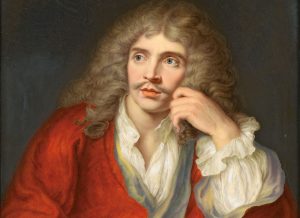
Molière, the answer to the clue at 19a, took me down memory lane to when I was preparing for my Bachelor of Arts degree examinations. I had French as one of my elective subjects. Before that, I had studied French for three years at Alliance Française, Calcutta and was awarded the Diplôme de Langue Française with Mention Honorable. For my degree exam, I had to study L’Avare, a comedy that Molière wrote in 1668. It is one of his best-known works, centred on the character Harpagon. In those days, I liked it so much that I would read it over and over again, laughing each time. I now return to the plot. Harpagon is an extremely miserly old man obsessed with money. He lives with his children, Cléante and Élise, whom he tries to control completely, especially in matters of marriage. Harpagon values wealth above all else and sees relationships mainly as financial arrangements. Cléante is in love with a poor but charming young woman named Mariane. However, Harpagon himself plans to marry Mariane, not out of love, but because she is modest and unlikely to demand an expensive lifestyle. This creates tension between father and son, as both secretly desire the same woman. Meanwhile, Élise is in love with Valère, a young man who has secretly entered Harpagon’s household as a servant to be near her. Harpagon, unaware of their relationship, intends to marry Élise off to a wealthy older man, Anselme, simply because the match would cost him nothing. The situation becomes more complicated when Cléante, desperate for money to support his love for Mariane, tries to borrow funds at high interest. Ironically, the lender turns out to be Harpagon himself, though neither initially realizes the other’s identity. When the truth emerges, it leads to further conflict. Harpagon’s greatest treasure is a hidden box of gold, which he guards obsessively. When the box is stolen by La Flèche, Cléante’s clever servant, Harpagon falls into panic and paranoia, accusing everyone around him. His extreme reaction exposes his greed and lack of trust. In the final act, the truth about Valère is revealed. He is actually the long-lost son of Anselme, who turns out to be a wealthy nobleman. This discovery resolves many conflicts. Anselme agrees to cover the wedding expenses, allowing Cléante to marry Mariane and Élise to marry Valère. Harpagon, relieved at the return of his precious money, consents to the marriages, but more particularly because they cost him nothing. The play ends by highlighting Harpagon’s unchanged nature. Even after all the chaos, his love for money remains stronger than his love for people. At a higher level, I also read Le Misanthrope by Molière, which he wrote in 1666, two years before L’Avare.
Please leave a comment telling us what you thought.
Across
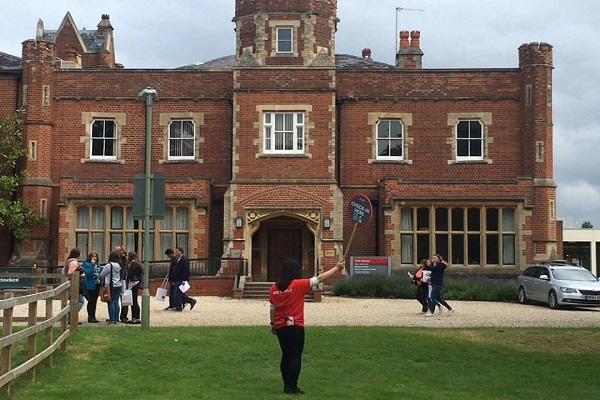
8a Poor grade’s bagged in English university (7)
READING: An anagram (poor) of GRADE (grade’s) taking inside (bagged) IN from the clue leads to the definition of a public research university in Reading, Berkshire, England
10a Herb is on time after returning, else sooner (7)
OREGANO: The definition of a perennial Eurasian herb, Origanum vulgare, of the mint family, having aromatic leaves used as seasoning in cooking is reached from a combo of ON from the clue and AGE (time) as the time of life reached or of being old coming from the other end (after returning) as reversals in the across clue preceded by (sooner) OR (else) as a conjunction meaning otherwise or else

11a Question about composition and application for writer (9)
WODEHOUSE: WHO (question) as an interrogative pronoun denoting which person or persons placed around (about) ODE (composition) as a form of lyric poetry, expression emotion and usually addressed to someone or something that’s a literary composition and USE (application) as the application or employment of something for a purpose takes to the definition of the surname of the English writer and one of the most widely read humourists of the twentieth century
12a Quickly and easily produced, I love terrace (5)
PATIO: A charade of PAT (quickly and easily produced) as an adjective meaning neatly suitable without effort or quickly and easily produced, as in something done lightly or effortlessly, I from the clue and O (love) as denoting love or the score of zero in a game of tennis takes to the definition of a paved outdoor area adjoining a house or forming a terrace, often used for sitting, dining, or recreation.
13a Reason I put on record, coercion primarily (5)
LOGIC: The definition of a noun denoting reason or sound judgment, as in utterances or actions is reached from I from the clue preceded by or placed after (on) LOG (record) as a regular or systematic record of incidents or observations or a record of a ship’s performance and experiences and followed by the primary or the initial letter (primarily) of C[OERCION]
14a Batting, openers not out? (7)
INDOORS: A charade of IN (batting) as the side ‘in’ at cricket, the one currently batting and DOORS (openers) as the plural of an entrance to a room or building that opens to allow entry guides to the definition of an adverb meaning in, into or within a building and hence not out
17a Team conversed with tsar or revolutionary (9,6)
DONCASTER ROVERS: The definition of a professional football team based in South Yorkshire, England is got from an anagram (revolutionary) of CONVERSED and (with) TSAR OR
19a French author increasingly defending story (7)
MOLIÈRE: The definition of the seventeenth-century French playwright, actor and poet, widely regarded as one of the great writers in the French language and world literature is obtained from MORE (increasingly) as an adverb denoting increasingly or additionally taking inside (defending) LIE (story) as story, yarn or myth
21a Copy between two lines, and fold (5)
LAPEL: APE (copy) as to imitate or copy placed inside (between) L and L (two lines) as two lines, where each L representing as the abbreviation for line, taking to the definition of a fold, specifically the folded-back or turned-back part of a garment or as a continuation of the collar
24a Joint below or bowel given treatment (5)
ELBOW: The definition of the joint or bend of the arm between the forearm and the upper arm is got from BOWEL from the clue that is subject to an anagram (given treatment)
26a Percussion instrument used to stop, when sounded? (9)
WOODBLOCK: The definition of a hollow wooden percussion instrument producing sharp, dry clicks when struck with a mallet or stick is arrived at from a homophone heard by the audience (when sounded) of WOULD BLOCK (used to stop) as a phrase equivalent of used to stop

27a Infinit? (7)
ENDLESS: The definition of an adjective meaning having or seeming to have no end is cryptically arrived at from INFINIT from the clue through INFINIT[E] that is actually seeming to have no end or being devoid of the end letter or, precisely, ENDLESS
28a Billion dollar contract? Pah! (3,4)
BIG DEAL: Double definition; the second being an exclamation of scorn, derision etc, used especially to belittle a claim or offer, an example of which is ‘pah’, an interjection of disgust that takes to the first, cryptically hinting at something of great importance or consequence e.g. a billion dollar contract or a very big deal or agreement
Down
1d Spiked wheel below widget ultimately for hand-held tool (6)
TROWEL: ROWEL (spiked wheel) as a small spiked wheel attached to a spur preceded by or coming after in the down clue (below) [WIDGE]T as the ultimate or terminal letter (ultimately) guides to the definition of a small handheld tool with a flat, pointed blade, used to apply and spread mortar or plaster

2d King, say, one on horse up top (8)
CARDIGAN: A combo of CARD (king, say) as a short for a playing card, an example of which is a king i.e. a playing card bearing the figure of a king, ranking above a queen but below an ace, I (one) as the Roman numeral for one placed upon in the down clue (on) NAG (HORSE) as a horse, especially a small one, in an upward direction (up) as a reversal in the down clue guides to the definition of a garment, specifically a knitted sweater or jacket, an example of which is top i.e. a garment worn on the upper half of the body

3d Dynamic change, hot I gathered (4-6)
HIGH-OCTANE: The definition of a slang term for an adjective denoting high-powered or dynamic is got when CHANGE, HOT I is subject to an anagram (gathered)
4d The role is complicated for those with paying guests (9)
HOTELIERS: An anagram (complicated) of THE ROLE IS guides to the definition of those with paying guests i.e. people who run hotels and accommodate paying guests

5d Little sound that may similarly rise and fall? (4)
PEEP: The definition of a short, shrill little cry or sound, as of a young bird is arrived at from its palindromic sequence of likewise going up and coming down in the down clue (that may similarly rise and fall)
6d Rubbish as well, Scottish entertainer? (6)
TATTOO: A charade of TAT (rubbish) as an informal term used to describe items that are cheap, poorly made, tasteless or useless and essentially serving as a synonym for rubbish, junk or trash and TOO (as well) as an adverb meaning also, in addition or as well produce the definition referring to the Royal Edinburgh Military Tattoo that is a famous Scottish entertaining event held in Edinburgh and featuring military bands, music and performances

7d Big gun in business, defeat Uncle Sam (8)
COLOSSUS: The definition of an influential person or a person who is abnormally large and powerful, an example of which is a big gun i.e. the most important or powerful person in an enterprise or field is reached at from a charade of CO (business) a short version for company that is a commercial business , LOSS (defeat) as a setback or defeat and US (Uncle Sam) as a short for United States, whose personification or symbolic nickname is Uncle Sam that is often used in political cartoons, propaganda or informal speech
9d Little wriggler eats (4)
GRUB: Double definition; the second referring to an informal term for a meal, an example of which is eats i.e. a slang word for foods, especially snacks that takes to the first denoting the thick-bodied, sluggish larva of certain beetles and other insects, an example of which is the little wriggler i.e. the larva of a mosquito
15d Error in more than one drawing 23 Downs (10)
DOODLEBUGS: BUG (error) as an error or fault, as in a machine or system, especially in a computer or computer programme placed inside (in) DOODLES (more than one drawing) as the plural of an aimless drawing yields the definition of flying bombs as used by the Germans in World War II and serving as an example of the plural form of 23 Down
16d Their woes compounded if not (9)
OTHERWISE: An anagram (compounded) of THEIR WOES leads to the definition of an conjunction denoting ‘or else’ or ‘if not’
17d Spoiler of fun, wet blanket, say? (8)
DAMPENER: The definition of a person who dampens the enthusiasm or enjoyment of others or one who spoils the fun by being very serious or practical is arrived at from wet blanket, say, an example of a colloquial phrase that is literally a dampener with which one can dampen or moisten something but that (wet blanket) also serves as an idiom referring to a dismal person inclined to damp other peoples’ spirits and thus also a definition by example (say)
18d Note on piano in melody wrongly used (8)
EMPLOYED: E (note) as the third note or sound of the natural diatonic scale in music placed upon in the down clue P (piano) as the abbreviation for piano in a piece of music, denoting an instruction to play quietly put inside (in) an anagram (wrongly) of MELODY takes to the definition of a verb in the past tense denoting used or involved in activity or work
20d Offer to put in fuel when up for drive (6)
LIBIDO: BID (offer) as an offer of a price, especially at an auction placed inside (to put in) OIL (fuel) as a viscous liquid derived from petroleum, especially for use as a fuel or lubricant in an upward direction (when up) as a reversal in the down clue leads to the definition of the overall sexual drive or desire for sexual activity of a person
22d Fated flower cut by edges on knife (6)
LIKELY: The definition of an adjective meaning probable or such as well might happen or be true, an example of which is fated i.e. certain to occur, destined or inevitable is arrived at from LILY (flower) as a type of beautiful, trumpet-shaped flower that often grows near water and has large, showy petals intervened or getting inside (cut) by the outermost letters (edges) on (of) K[NIF]E
23d Incendiary device in packet? (4)
BOMB: Double nounal definition; the second being a slang term for a large amount of money, an example of which is a packet, another slang term for a sizeable sum of money that takes to the first denoting an incendiary device that contains a highly inflammable substance and designed to burst into flames on striking its objective
25d Stop pouring wine honey, enough now – for starters? (4)
WHEN: The definition particularly referring to the colloquial phrase ‘say when’ denoting ‘tell me when to stop, specifically when pouring a drink’ or ‘say it when you’ve had enough’ is arrived at from the starting or first letters (for starters) of W[HEN] H[ONEY,] E[NOUGH] N[OW]
There were many clues that I liked in this puzzle such as 11a, 14a, 17a, 19a, 24a, 27a, 1d, 2d, 15d and 25d; 27a being the best of the lot. My prayers to the Almighty for the eternal rest and peace of BD and my thanks to Dada for the entertainment. Looking forward to being here again. Have a nice day.
Good morning and thank you for your wonderful full review which I have learnt a lot from – as usual. I enjoyed your trip down memory lane and it brought back a time, long ago when I too studied French, but certainly not to the level that you achieved. The book that I read and re-read was Le Grand Meaulnes by Alain Fournier. It was a very poignant read and at the time in my life when, perhaps I was dreamiest being a teenager! Now that I’m so much older I am wondering whether to read it again and maybe my granddaughters might read it one day. Today it is beautiful, sunny and warm so I’m off to plant potatoes and onions. Many thanks.
3*/4* …
liked 27A “Infinit? (7)”