Daily Telegraph Cryptic No 31056
Hints and tips by Smylers
Hello and Happy Thanksgiving to all those in Canada, especially to Falcon with whom I share this Monday slot. Also Happy Indigenous Peoples’ Day, Columbus Day, and Sukkot as appropriate.
And, perhaps more relevantly to this blog, Happy National Train Your Brain Day — something which is surely best celebrated with a cryptic crossword. Today’s Telegraph Crossword has gentle cluing, no obscure words, and a friendly grid†. If you’re as bad at anagrams as I am then increase the difficulty rating to ★★ (but almost none of you are, so I’ve rated it accordingly).
I’m guessing today’s setter is X-Type. Apart from anything else, the quick crossword starts with a type of wood.
Please do leave a comment below saying how you found the crossword, or if a hint is unclear or an illustration baffling — or just to update us on your life in general. It’d be especially lovely to hear from you if you haven’t commented before. We are all guests here, so please consult Big Dave’s etiquette guide for the house rules.
† By grid friendliness I mean the layout of things like how many answers have first letters crossing with others, a property literally of the grid itself, without taking into account the clues or the answers.
Across
1a Opposition badly resents CIA (10)
RESISTANCE: Arrange the rest of the clue badly to spell out the answer. I’m so bad at anagrams that I left this till I had all the crossing letters. Then I still couldn’t see it and resorted to electronic assistance to ensure that I got these hints written in time.
6a Place where soldiers eat the edges of marmite sandwiches (4)
MESS: Use the letters located at the left and right edges of each of the final two words in the clue. The yeast-based spread’s name is a trademark, so usually written ‘Marmite’ with a capital M; lower-case ‘marmite’ is a cooking pot, which might work less well in sandwiches.
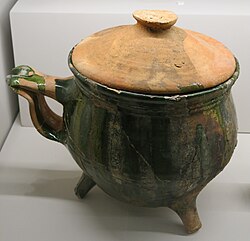
Pic credit: Jean and Fred Hort
10a Quiet and idle, briefly by a public square (5)
PLAZA: Enter in order: the musical abbreviation that indicates ‘quiet’; a synonym for ‘idle’ briefly, that is missing its last letter; and the A from the clue.
11a Fan has one drink, then another (9)
SUPPORTER: The answer is made up of two drinks. The first is a verb meaning to drink; the second is the name of a particular drink — one that tastes great in the afternoon, according to The Saw Doctors:
12a Rich source of water also containing diamonds (4-2-2)
WELL-TO-DO: Start with a literal source one could get water from (not, in this case, a way of indicating the letter W!). Follow with a synonym for ‘also’ containing the abbreviation for diamonds used by those who who haven’t worked out how to type ◆ symbols.
13a Electric vehicles fashionable, in retrospect (5)
TRAMS: The answer formed from a word meaning ‘fashionable’ when entered in retrospect across the grid.

15a Impudent old president keeps fighting (7)
FORWARD: We need the name of an old USA president. I mean, not that old: many here will remember him. Inside his name keep a word for fighting, the really bad sort between countries. Then if you’re so inclined, pause for a moment to pray for those currently affected by such fighting.
17a Boss is certainly flash, drinking a tiny bit of port (7)
SUPREMO: Here we need a word for ‘certainly’ followed by a flash, as a in a very brief period of time. The combination drinks in a tiny bit of ‘port’, specifically its first letter.
19a English politician interrupts trial, causing a storm (7)
TEMPEST: Make the single letter abbreviation for ‘English’ and a term for some politicians interrupt another word for a trial or experiment. The abbreviation is in Chambers and so undoubtedly permitted by crossword setters, but can anybody think of a context where it would be used as a stand-alone abbreviation (not as part of a longer name, such as an organization with ‘English’ in it)? Please comment below if you have an example.

Pic credit: Yale Center for British Art
21a Wealthy lady bet on party (7)
DOWAGER: Start with a usual party. On that place a word for a bet.
22a At first, everyone likes very entertaining, silly magical creatures (5)
ELVES: Simply take the first letters of the following words in the clue, and keep going till you have filled all the little boxes.
24a On your own, capturing top gangster (2,6)
AL CAPONE: Make a word meaning ‘on your own’ capture a top (of a bottle, perhaps).
27a Art house I renovated gets sanction (9)
AUTHORISE: Renovate the letters of the first 3 words to spell out the answer. Remember that ‘sanction’ is a contranym, so it can also mean the opposite of whatever you first thought of.
28a Turning around, strips – you do it in bed (5)
SLEEP: Think of a word that can mean ‘strips’ in some contexts and turn it around to get the answer. Or do what I did: observe that ‘strips’ is in the 3rd-person present tense, meaning that gramatically its synonym must end in a particular letter, then think of something you do in bed that begins with that letter, and check that when read backwards it can mean ‘strips’.
29a John twice heard Scottish singer (4)
LULU: Think of what a john can be (a meaning that Chambers labels as ‘N Amer colloq’) and say it out loud twice to sound like the answer.

Pic credit: © Scottish Government, CC BY-2.0
30a Spotted young man touring India and Spain, flipping inquisitive (4,4,2)
LAID EYES ON: This one is quite involved; take a deep breath and think of a word for a young man. Make that tour the letter in the Nato phonetic alphabet indicated by ‘India’. Follow that with the code used on vehicles to indicate they are from Spain. End with a word for ‘inquisitive’ which has been flipped to face the other way. Phew!

Down
1d Nervous pirate holds back tears (4)
RIPS: The answer is held backwards in consecutive letters of the first two words of the clue. Note that ‘tears’ has multiple pronunciations.

2d Instrument trapped spirit (5,4)
SNARE DRUM: Enter a word meaning ‘trapped’ and an alcoholic spirit. Remember that word breaks in the wordplay components don’t have to line up with those in the answer.
3d Small catch for one constantly moving home? (5)
SNAIL: Start with the clothing abbreviation for ‘small’. Follow with a word that can mean to catch somebody, as in to corner them.
4d Able seamen trick Democrat and run away (7)
ABSCOND: Enter in order: the plural of the abbreviation for ‘Able seaman’ (one of the usual terms for a sailor); another word for a trick; and the letter that indicates Democrat in American politics.
5d Abundant debt hidden by policemen (7)
COPIOUS: The usual debt is hidden inside a term for policemen. Or policewomen.
7d Background actor‘s partner once picked up painting? (5)
EXTRA: Start with a term for somebody who was once your partner; end with what painting is an example of (indicated by the question mark), picked up and written up the grid rather than down.
8d Bursars got confused in European city (10)
STRASBOURG: Confuse the letters of ‘bursars got’ to spell out the answer.
9d What soup is cooked for boxer? (8)
SOUTHPAW: Cook the letters of ‘what soup’ to spell out a term which applies to about 20% of boxers (and which only makes sense if they are facing west at the time).

Pic credit: Ruebe237
14d Perhaps how Humpty Dumpty fell is crazy (3-3-4)
OFF-THE-WALL: Without the hyphens this could be a description of a fall from a well-known nursery rhyme.
16d States working to limit current antipathy (8)
AVERSION: Start with a verb meaning ‘states’. End with the usual word for ‘working’. Between them, they limit the physics abbreviation for electrical current.
18d Skilled workers in Niger seen messing around (9)
ENGINEERS: Mess around with the letters of ‘Niger seen’ to spell out the answer.
20d Russian empress bought sari, naturally reduced (7)
TSARINA: Reduce the preceding phrase by removing letters from its outside, to reveal the answer lurking within.
21d Ordered extremely decisive statement of belief (7)
DECREED: Start with the letters at the extremes of ‘decisive’. End with another word for a statement of belief.
23d Important talk cut short after six (5)
VITAL: Start with ‘six’ in Roman numerals. After that put ‘talk’ from the clue, but cutting it short.
25d Unhealthy-looking food from Cornwall? (5)
PASTY: This is a double definition; the two meanings have different pronunciations.
26d Candid old writer (4)
OPEN: Follow the abbreviation for ‘old’ with a writing implement.
Quickie Pun
I found that I needed to solve most of today’s Quick Crossword just to get the first 2 across answers. Their clues are are italicized, meaning their answers when spoken together sound like another word or phrase:
TEAK + ACHE
The pun could refer to at least 3 things today. It could be:
TEACAKE, which is the usual term I learnt growing up in the north of England for a soft bread roll, such as these sold by a bakery in Lancashire:

or:
TEA CAKE, marshmallow and biscuit in chocolate made by Tunnock’s, so presumably a Scottish term:

You don’t get adverts these days boasting that something contains glucose and claiming that’s good for you!
or:
a toasted TEACAKE, which is basically a hot cross bun without the cross, sometimes known without its ‘toasted’ qualifier in places where neither of the above two options are local:

Note the one thing it’s definitely not, despite the name, is a a cake flavoured with tea. For that you want a tea loaf.
Recent Reading

 Lynne Murphy is almost uniquely qualified to comment on differences between American and British English: she’s a professor of linguistics who was born in the USA and grew up there but has lived for the past few decades in the UK. And she’s produced a fantastic book for anybody interested in the English language.
Ranting about ‘Americanisms’ is a popular topic for British newspaper columnists and comedians — but often, it turns out, without knowing what they’re talking about. The Prodigal Tongue explains the actual source of many such words and phrases — their spelling, meaning, and pronunciation — with the truth often involving words falling out of fashion in one country yet persisting in the other, and several instances of the USA choosing a more ‘English’ spelling while the UK takes on French influences. All assertions are referenced; they aren’t mere preferences of the author. But that doesn’t make this an academic text book: it’s aimed at the public and engagingly written.
To jump straight into a selection of American-British differences, with explanation of how illogical both variants can be, start at chapter 6, ‘Logical Nonsense’. Some of the most interesting differences are words which exist in both variants and have meanings that are definitely distinct enough to cause confusion yet close enough that many of us haven’t spotted there are differences — including ‘obituary’, ‘frown’, and ‘bacon’. Elsewhere the book covers how the language variants diverged and ‘the dictionary wars’, where rival American publishers were each pushing their preferred spellings as authoritative, and the influence of Norman scribes. I learnt so much about the English language and its formation in general, not just on its transatlantic differences. Apparently you’re somebody who likes words enough not only to voluntarily solve cryptic crosswords but also to hang around a website about them and read all the way through the blogger’s off-topic ramblings at the bottom; I think you might like this book too.
I doubt I will be the only one coming on to say that this was one of, if not the fastest solve I can remember. It was almost over too quickly to be truly enjoyable, but I did like 3d.
Thanks to our Monday setter and Smylers.
A gentle start to the week.
Top picks for me were 30a, 17a, 2d and 14d.
Thanks to Smylers and the setter.
0.5*/2.5*. This was very light and fairly enjoyable albeit with no particular favourite.
Thanks to the setter and to Smylers. I’ll definitely add The Prodigal Tongue to my reading list. The book title is worth the price on its own!
A gentle trog in crosswordland to start the week. Lots to enjoy, but I’ll plump for 5d as cotd. Thanks to compiler and Smylers.
Rather underwhelmed by this one, which almost felt like a “quick cryptic”. My last one in was the anagram at 8d, by which time my sense of ennui meant I just clicked “reveal word” and made a nice cup of tea. Roll on tomorrow. */**
This would be a good one for a beginner to cryptic crosswords with a mentor to get them going.
I agree that it was a gentle start to the week. WRT 19a, would ENO, as in English National Opera, fit the bill?
Hi, Mike. ‘ENO’ is undoubtedly a fine abbreviation when used with all 3 letters. As are, say, ‘ECB’ and ‘EFL’. But I don’t those are sufficient to justify E on its own being used to indicate ‘English’.
For instance, you can’t decode ‘ENO’ by looking up each of the letters separately in a dictionary; you have to look up the abbreviation as a whole. Yet Chambers has ‘E = English’, so I’m wondering where an E on its own, not part of a longer abbreviation, is used.
I believe one could apply the same argument to A for American which also regularly appears in crosswords. The only reason that C is not used for Canadian would seem to be that dictionary compilers have overlooked it.
A lovely start to the week which flowed from the off.
Interestingly (or not interestingly), The first entry the OED (a proper dictionary) has for 27a is the penultimate letter as a z. I appreciate that the following word, meaning fourth last in a sequence, has no use whatsoever in life but I like its construction preantepenultimate. Clearly, a logophile was bored one day.
Plenty to choose from for the pody but I’ll go with 11a, 9d and 18d.
MT to X-Type (?) and Smylers.
1*/4*
It’s Oxford style to use the traditional British -ize endings on words (while also accepting -ise as a permitted alternative). There’s a section on this in the book I review above, which you should definitely read!
Basically, it’s an attempt to write a Greek suffix in the Latin alphabet; English originally went for -ize but French for -ise — and then English gained some words from French rather than directly from Greek, meaning that we had a mix of both endings. In the UK, those French imports influenced some writers switching existing -ize words to -ise; in the USA, Noah Webster wanted one ‘correct’ spelling per word and picked -ize as better matching the pronunciation (distinct from, say, the -ise in ‘promise’). British dictionaries are tolerant of multiple variant spellings; Oxford standardized on -ize as the main spelling as closer to the Greek.
But in the 90s, Cambridge University Press and The Times both switched their style guides from -ize to -ise, increasing how often -ise is seen in the UK. This and the worldwide web leading to more people in the UK being exposed to American spellings online led to many British people seeing the difference, and jumping to the conclusion that if there are two spellings and -ize is the American one then -ise must be the British one, so rejecting -ize. As Lynne Murphy writes: “True to form, when wanting to look not-American, British English looks more French.”
That’s the 1990s, not the 1890s, so surprisingly recent. The book has a graph showing British writing using -ize forms 80% of the time at the start of the 90s and this falling by the end of the decade to just 5%. Most of us were alive during this time, yet didn’t spot it happening.
Thanks for that, S.
It’s an interesting one as the Americans, correctly, chose the original Greek and Latin endings (izen & izere). However, they’ve lost the plot in the last century or so, replacing the s with a z at every given opportunity e.g analyze (the OED has ise and ize as an Americanism).
I recently read somewhere that something like 65% of professional writers in Blighty use ize. Billy the Conk and his Norman muckers are winning the day, having changed z to s whenever they could. But, it’s good to see the above are flying the flag for what it should be.
Your point about English is a good one. As it’s an adjective 90% of time, it will rarely, if ever, be on its own. If there are no examples, does that mean a setter can’t use it?
I don’t know what the cruciverbal rules are.
It’s in your favourite dictionary and mine, Chambers, so setters are absolutely permitted to use it. It’s just what it’s doing in that dictionary that’s puzzling me.
As you know, that means jack to me.
It’d be good to know what the rules are. I’ll ask Silvanus of Mr Tumble the next time they do one.
It’s Telegraph policy to use only the “-ise” endings, never the “-ize” ones. I sometimes have to ignore or override my spellchecker to comply with this!
Gosh. That’s surprising.
Whilst I have you, Smylers has raised a point about English representing the letter E in today’s crossword (19a). He and I can’t think of any examples of E, on its own, meaning English. All we have is ENO, En, Eng and others. Chambers says that it is an abbreviation.
.
Two questions:
1. Do you have an example?
2. If there are none, I’m assuming that it’s still okay for setters to use it?
There’s also ESL (English as a second language) which coincidentally I believe RayT teaches in Paris, but as to E on its own, I can’t immediately think of an example either.
To be honest, though, it’s an academic argument since, as far as single-letter abbreviations go, setters are given a list of those acceptable in Telegraph cryptics. This list can be found on Pages 168-170 of Chris Lancaster’s excellent book “How To Solve A Cryptic Crossword”. So if it’s on the list, it’s fine, if it isn’t then it’s unlikely you’d ever see it in a Telegraph puzzle. The origins of the abbreviations really are immaterial!
Thank you, S.
It’s all good to know.
TDS. Not forgetting Precepriorpropreantepenultimate (seventh last in a sequence). Who’d ever want to use that!
Love it!
I’ve found propreantepenultimate but not the full version though I’m sure it’s out there.
Great fun.
I made it up, old chap. Am at a bit of a loose end today!
Got me!
To quote Liam Neeson, I will hunt you down….
“A man’s got to know his limitations”. Who said that in a film?
The great Inspector Callahan, of course.
What a ledge!
It’s what you’d call an embryonic protologism/neologism. I think I might patent it.
You love it, J!
Dopey?
Like it, RD. Like it.
Very Monday, very jolly. Some fun and/or relevant surfaces: 15a, 3d, 9d, etc. Best thanks to setter and Smylers. Very noble sentiment at 15a, dear chap. Hats off.
This was the easiest cryptic crossword for a while. I agree with the 1 star rating. 14d and 20d have appeared quite recently, of which I thought the previous cluing to 14d (Pink Floyd) was funnier than todays. 3d was great, and I also liked 13a. Thanks for the hints, and to the setter.
Very Quiptic & pretty much solved in clue order. Still after a deal of crumpet scratching with Friday’s back pager & the weekend prize puzzles it was rather nice to rattle one off in *time.
Thanks to the setter & to Smylers.
The Spirit of Rufus! */****
Candidates for favourite – 6a, 12a, 29a, and 4d – and the winner is 29a.
Thanks to X-Type(?) and Smylers.
A lovely start to the week, very enjoyable with a great mix of clues. I liked 21a and 3d the most but it was all great fun.
Many thanks to the setter and to Smylers for the hints.
Whistle stop tour today but enjoyable none the less. The anagram at 9d was a new word for me. I was a way at the weekend so behind so can catch up on the prize puzzles now. Thanks to setter and Smylers
Very nice puzzle and as noted gentle. A welcome relief after the two very tricky prize cryptics at the weekend. I liked 11d the boxing anagram and 30a. Favourite was the witty homophone at 29a. On the subject of US English there used to be a portable toilet company called ‘Dav’s Lavs’ in London which seems rather prim compared with ‘Don’s Jon’s’ seen to the amusement of teenage boys on a long ago trip to the US. Thank you setter and blogger.
Very gentle as others have said and reminiscent of Monday puzzles in the past – thanks to our setter and Smylers.
Favourite clue for me is 3d.
I wish to associate myself with the comments of my learned friend above.
Couldn’t have put it better myself.
…and thank you to our setter and to Smylers. I have ordered The Prodigal Tongue.
Dowager- a widow holding title,rank or property from her late husband – a dignified elderly lady. Source S.O.E.D.
Not necessarily ‘wealthy’.
True, though presumably wealthier than if she hadn’t inherited those things from her husband. Chambers also has “a grand-looking old lady”; again that doesn’t directly say that she’s wealthy, but I suppose she must be doing OK to afford to look like that?
I’m with you b.g. Inherited title/rank yes but wealth not automatically.
I wish to complain in the strongest possible terms, to the very highest authority.
I completed this crossword without help. This is not why I pay my daily £0.0027p!
At 365 days for one pound sterling (extortionate in my view) I expect to be stretched, to be tested. I expect to be seen pacing up and down in my study, muttering about The Hanseatic League, archimandrites, or haragake.
This simply will not do.
Copied to Mr Lancaster, Sir Keir Starmer, the bird who is the new Archbishop of Canterbury, and Taylor Swift.
Thanks to the setter and T’Lad From Ilkley
Thanks to the Setter and Smylers. Like others we found this the quickests and easiest puzzle to solve since joining the blog. COTD 30a. LOI 13a.
Good morning. Read and fill from the outset, without stopping. A new record for me! Enjoyed it immensely, and as other have noted, a perfect X word for beginners. Many thanks for the review and to the setter!
I certainly found this reasonably straightforward but I wouldn’t rate it as one of the easiest for a long time as lots of you thought – probably just me and the Monday morning brain fog!
Thanks to Smylers and setter
Monday as a Monday should be. To encourage not to dishearten. There are too many things to dishearten on a Monday.
A nice gentle read and write to start the week. Favourites were 29a for more toilet humour and 7d for the lovely surface. Really liked the above ise/ize discussion and whilst aware of some of the history, I have lived through it without spotting the transition but rather assuming it’s ‘always been like this’, i.e. US vs UK English. It’s great top get the extra depth.
Thanks to Smylers and the setter!
Very gentle old-style Monday puzzle – just what we need to ease our way into the new working week. No particular favourite just grins all round,
Thanks to our setter and to Smylers for the review.
Took me a while to get this Monday puzzle off the ground, but in the end it all fell into place. Brain a little groggy as it is Thanksgiving week-end in Canada and also happened to be wifey’s birthday, so brain not quite up to normal working standard.
2*/4*
Favourites 18a, 29a, 30a, 5d & 14d — with winners 29a & 30a
Laughs and smiles for 21a, 14d & 25d
Thanks to setter & Smylers
A completion without the need to refer to the hints or any other source of reference. Haven’t had one of those for a few weeks. Although I nearly made a mistake at 10a, thinking Italian rather than Dealey.
There was a similar clue to 14d a week or so ago and the gangster almost writes itself in. That said, my COTD was 5d which brought a smile.
Thank you to the setter and to Smylers for the hints.
Gentle1 * but very pleasing. Favourite was 28 down and last in the European city. Setter has not yet been identified but thanks sent as well as to Smylers.
I cannot add more to what has already been said about a gentle, very pleasant crossie, but am I the only one to notice a possiblre second pun in the Quick crossword? Intended or not it strikes me as DOOMSTER.

Time now to return to my vampire’s coffin for another twelve years or so.
It is indeed a good spot, you foxy Filbert, you.
Whenever I hear the word doom, I can’t help thinking of Private Frazer.
What a truly joyous series that was.
Sailed smoothly around the North apart from unfamiliarity with 2d and then slowed down mainly due to problem with fully parsing 20d and 30a. Altogether no sweat but plenty of fun to be had. Thank you setter and Smylers.
Hugely enjoyable, and for the first time for several days I didn’t feel like a complete dunce. No deep GK dives, no obscure Gods, sports or peculiar words. Hooray! To anyone who found this too easy, please remember those of us who struggle with Toughies, and the newbies starting out. I only needed a little help to finish, with LI being 16d. COTD to LOL 3d. Visited 8d in early June. Disappointed as it was so much busier than when we last were there in 2017. Big thank you to the setter for a great start to the week, and to Smylers for explaining 16d.
That’s as near to a read and write as I am ever likely to get but I am extremely grateful for it because I am way under the weather and have been for a while. No word from the cardiac department despite an urgent request from my GP. At lest I have an appointment with him tomorrow. With my blood presssure peaking at 207/108 and my head pounding, I need it to be sorted.
Thank you, setter for s very satisfying puzzle to start the week. Thank you, Smylers for the hints.
Ooof, that doesn’t sound fun, Steve. Best wishes for the appointment tomorrow and getting things sorted. Glad you found the crossword satisfying.
So sorry to hear what you are going through Steve. My thoughts are with you. Take good care.
Hope this will be sorted out quickly by your GP and the local Cardiac Department. Must be very worrying so will hold you in the light.
Steve, I sympathize as I too have ongoing heart/bp problems which refuse to reduce. Hope you get relief soon.
Good fun – 25D v funny. VMT Setter & Smylers.
Thoroughly enjoyed today’s puzzle especially as had limited time to look at it. Got held up with 9d as Knew it was an anagram but didn’t know the word. Many thanks to the setter and Smylers.
With so many commentators, paticularly the earlier ones, saying how easy this was I now fear a stinker will be heading our way next Monday. As to the puzzle itself I thought it about right for a Monday. Having had a crosswordless weekend, for reasons beyond my control, and this being my third crossword today I was rather glad of that. Favourite was 17a. Thanks to the setter and Smylers.
Started and finished this evening. Never heard of 9d but got it anyway from the checkers and the remainder of the anagram: “it couldn’t be any thing else” and seemed plausible. Also, needed to consult my son, a musician, for the first word of 2d; he got it straight away but I hadn’t heard of that drum. COTD 25d for its parsing and surface. (I was there last month and had one – delicious). Thanks to the setter and Smylers. */**
As others have said very light but still entertaining for a Monday. Liked the escargot at 3d, the food from Cornwall at 25d and spotted at 30a
Thanks to setter and Smylers
Gosh, that was all over in a flash! About ▩▩▩▩▩▩▩▩▩ on the train and it’s done.
[Time redacted — see Big Dave’s Etiqutte Guide for why.]
A busy weekend put me behind, but this pleasant crossword helped me get caught up. Thanks to Setter and Smylers. 6a caught the eye because of fond memories of marmite soldiers dipped into a soft boiled egg.
Good evening
Saved the crozzie for my break at work this afty/evening, but permitted myself a peek on the way in. Much more Mondayish and straight forward than last Monday’s!
1a, strangely, was my last to fall. I glanced at it first thing, figured it for an anagram, cracked on with the rest of it, and thought I’d finished – oops! Wrong!
COTD is 29a. This gives me the opportunity to bring you a Clerihew, which I haven’t done in ages:
Lulu
Says “when I talk to you, you
Get Posh Scots, Estu’wy, AND mid-Atlantic! What a choice!
Three TOADALLY different accents from one voice!”
2*/4* …
liked 1D “Nervous pirate holds back tears (4)”