Sunday Telegraph Cryptic No 3372
A full review by Rahmat Ali
+ – + – + – + – + – + – + – +
This puzzle was published on 7th June 2026
BD Rating – Difficulty ** – Enjoyment *****
Greetings from Kolkata. Dada has given us a very delightful solve this Sunday and now I present to you a full review of his puzzle. Hope to have your valuable feedback and comments.
After solving the puzzle, I searched the internet and learned a great deal about the etymology of three of the words connected with it. At first, I searched for the etymology of ‘violin’, the answer to the clue at 10a. The word ‘violin’ derives from the Italian ‘violino’, meaning ‘little viola’, with the diminutive suffix -ino indicating smallness. ‘Violino’ itself comes from ‘viola’, which traces back to the Medieval Latin ‘vitula’, the name of a stringed instrument and possibly linked to Vitula, a Roman goddess associated with joy, victory and celebration, although this connection remains uncertain. Thus, the etymological development is vitula → viola → violino → violin. The term entered English in the sixteenth century, when the modern violin was emerging in northern Italy. The same root also gave rise to related instrument names such as ‘viola’, ‘violoncello’, later shortened to ‘cello’, and ‘viol’.
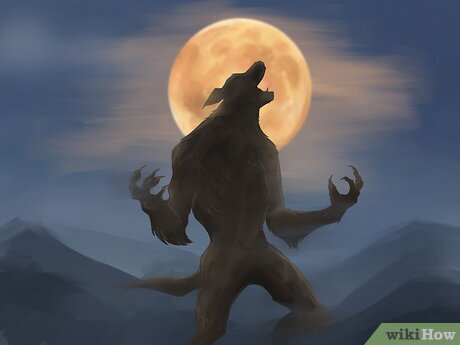
Next was the etymology of ‘werewolf’, the answer to the clue at 12a. The word ‘werewolf’ has ancient Germanic origins and literally means ‘man-wolf’. It derives from the Old English ‘werwulf’, a compound of ‘wer’, meaning ‘man’ or ‘adult male’, and ‘wulf’, meaning ‘wolf’. The first element, ‘wer’, is cognate with Old High German ‘wer’ and Latin ‘vir’ i.e. ‘man’, but it gradually disappeared from everyday English, surviving mainly in compounds such as ‘werewolf’. The second element, ‘wolf’, has remained largely unchanged throughout the history of the language. Similar forms occur across Germanic languages, including Old Norse ‘varúlfr’ and Old High German ‘werwolf’, reflecting a widespread belief in humans capable of transforming into wolves. The term has been recorded in English since at least the early medieval period, when folklore and superstition concerning shape-shifters were common. Over time, ‘werewolf’ evolved from a folkloric designation into the familiar modern term for a mythical person who transforms into a wolf, especially during the full moon.
Finally, I learnt the etymology of ‘sandwich’, part of the answer to the clue at 13a. The word ‘sandwich’ derives from the title of the John Montagu, an eighteenth-century English nobleman. According to a popular account, the Earl requested meat placed between two slices of bread so that he could eat conveniently without interrupting his activities, often said to have been card playing. Other people began ordering the same as Sandwich and the name gradually became attached to the food itself. The title ‘Earl of Sandwich’ comes from Sandwich, a historic town in Kent. The place name is believed to derive from Old English elements meaning something like ‘market town on sandy ground’ or ‘sandy harbour’, although scholars differ on the precise interpretation. Thus, the modern word ‘sandwich’ originated not as a description of food but as a surname and noble title linked to a geographical location. By the nineteenth century, it had become the standard English term for bread enclosing a filling.
Please leave a comment telling us what you thought.
Across
8a Slump, a myth (4)
SAGA: SAG (slump) as to sink, subside or bulge downwards under weight or pressure or through lack of strength, an example of which is to slump i.e. to fall or sink suddenly followed by A from the clue takes to the definition of a long, detailed and complicated story, account or sequence of events and originally referred to medieval heroic tales from Norway and Iceland an example of which is a myth i.e. a traditional story, typically involving supernatural beings or events, that explains fundamental beliefs, cultural worldviews or natural phenomena
9a I doubled energy? (3)
EGO: The definition referring to the ‘I’ or self, that which is conscious and thinks is arrived at from a combo of E and GO (doubled energy) as doubled energy, where E is the symbol for energy as a quantitative property in physics and GO is a colloquial term for energy, vitality or activity
10a Fiddle reversing 0-0-4? (6)
VIOLIN: The definition of a musical instrument of the woodwind or string family, specifically a four-stringed instrument played with a bow and also known by the name ‘fiddle’ is reached from a charade of NIL (0) as a noun denoting naught, nothing or zero or as a symbol 0, O (0) as symbolically representing zero or cipher and IV (4) as the Roman numeral for four, all sequentially coming from the other end (reversing) as reversals in the across clue

11a Scandinavian entry in lexicon, or dictionary (6)
NORDIC: The definition of an adjective denoting of, relating to or characteristics of Scandinavia or its peoples, languages or cultures is part of or hidden inside (entry in) [LEXICO]N, OR DIC[TIONARY]
12a Transformed individual, for many, used to be philanderer (8)
WEREWOLF: The definition of a person who transforms into a wolf or an anthropomorphic wolf-like creature, especially during a full moon, according to various legends, folklores or myths is reached from a charade of WERE (used to be) as the past tense plural form of the verb ‘to be’ indicating a previous state of action or existence and WOLF (philanderer) as a philanderer or a man who likes many women and has short sexual relationships with them
13a Snack served with cut of beef, a lip-smacking hit? (7,8)
KNUCKLE SANDWICH: A charade of KNUCKLE (cut of beef) as a cut of meat, more particularly a joint of veal or the meat from a young calf, consisting of the part of the leg below the knee joint and SANDWICH (snack) as an item of food consisting of two pieces of bread with a filling such as meat or cheese takes to the definition of a slang term for a forceful punch or violent blow to the mouth, an example of which is a lip-smacking hit i.e. a strike or impact to the lips that causes a sharp smacking sound
15a Strait-laced chief occupies filthy home (7)
STARCHY: The definition of an adjective meaning extremely formal, prim, stiff or conventional, an example of which is strait-laced i.e. excessively strict in manners, morals or opinion is got from ARCH (chief) as an adjective or noun prefix denoting chief, principal or prime placed inside (occupies) STY (filthy home) as a pigsty or a place that is notoriously dirty, untidy or unpleasant
17a Defender, one crying after Salah’s header (7)
SWEEPER: The definition of a noun denoting a defensive player in a game of football or hockey whose main task is to defend or try and stop the other side from scoring a goal is obtained from WEEPER (one crying) as someone who is weeping or crying, especially a hired mourner at a funeral placed after or preceded by (after) the starting or initial letter (header) of S[ALAH] (Salah’s)

20a Song given smashing analysis (6-9)
NUMBER-CRUNCHING: A charade of NUMBER (song) as a popular song or a musical item or track and (given) CRUNCHING (smashing) as a verb in the continuous form meaning crushing, grinding or smashing something down with force under pressure takes to the definition of a noun meaning the process of performing complex or large numbers of mathematical calculations, an example of which is analysis i.e. an investigation based on the properties of numbers
23a Rogues, wild animals reportedly? (8)
CHEATERS: The definition of the plural of someone who cheats, swindles, defrauds or deceives by trickery, an example of which is ‘rogues’ i.e. the plural of a scoundrel, rascal, cheat or an unprincipled, deceitful and unreliable person is reached from a homophone heard by the audience (reportedly) of CHEETAHS (wild animals) as the plural of a long-legged and swift-running wild feline animal of Africa and southwest Asia that is also regarded as the fastest animal on land
25a Excavate ditch the wrong way, boring (6)
TURGID: A charade of DIG (excavate) as to excavate or break up and move earth to form a hole, channel or tunnel using hands, a tool or a machine or to excavate an archaeological site and RUT (ditch) as a ditch formed through a natural process of erosion and progressive deepening over time coming from the right hand side (the wrong way) as reversals in the across clue takes to the definition of an adjective meaning boring, complicated and difficult to understand, specifically of language, writing etc
26a French cheese’s picked up for a picnic (6)
BREEZE: A homophone (picked up) of BRIE’S (French cheese’s) as denoting of or belonging to the soft, creamy cow’s-milk cheese originating from the Brie region of France guides to an informal definition of a thing that is easy to do or accomplish, an example of which is a picnic i.e. any activity that is easy or pleasant
27a Born in due course, last of all (3)
NÉE: The definition of an adjective meaning born, used in giving a married woman’s maiden name after her surname is arrived at from the last letters of each (last of all) of [I]N [DU]E [COURS]E
28a Noodles, but no starter? So be it! (4)
AMEN: [R]AMEN (noodles) as quick-cooking noodles, typically served in a broth with meat and vegetables in Japanese cuisine devoid of its starting or initial letter (but no starter) takes to the definition of an exclamation used at the end of a prayer or statement to express solemn ratification or agreement, literally meaning ‘so be it’

Down
1d Desert, half of area consumed by cratered rock (6)
MAROON: The definition of a verb meaning to desert, abandon or leave someone trapped and isolated on an island is obtained from 50% of the letters (half) of AR[EA] from the clue taken inside (consumed) by MOON (cratered rock) as a natural satellite of the Earth possessing a heavily cratered and barren surface composed of solid rock and dust
2d Police vehicle with standard outside as well as air-conditioning (5,3)
PANDA CAR: The definition of a police cruiser or a police patrol car, especially a blue and white one is got from PAR (standard) as an accepted level or standard on the outside of or surrounding (outside) a combo of AND (as well as) as a conjunction denoting together with, along with, in addition to or as well as and AC (air-conditioning) as an abbreviation for air-conditioning

3d A tool allowing writer to get to the point? (6-9)
PENCIL SHARPENER: The definition of a rotary tool for sharpening the point on pencils is cryptically arrived at from a writer or a physical instrument for writing (pencil) and a tool letting it to sharpen its blunt graphite tip into a sharp, usable conical point (sharpener)

4d Swine cleaner? Poppycock! (7)
HOGWASH: A charade of HOG (swine) as any of various mammals of the family Suidae, especially the domesticated swine or pig and WASH (cleaner) as an act or instance of cleaning something, especially a vehicle or an animal, using water and soap leads to the definition of a noun meaning worthless, false or ridiculous speech or writing, an example of which is a poppycock i.e. senseless, empty or foolish talk and writing
5d Off and on, all that has come and gone? (5,3,3,4)
EVERY NOW AND THEN: The definition of a phrase denoting off and on, every once in a while or at intervals is arrived at from EVERY (all) as an adjective meaning all, being all possible or each and all members of a group without exception, NOW (that has come) as at the present time or that has come, referring to this time or moment, AND from the clue and THEN (gone) as at that time or that has gone, referring to that time or moment
6d Make a respectful gesture and amaze dog (3-3)
BOW-WOW: A charade of BOW (make a respectful gesture) as a verb meaning to bend the head or upper body as a sign of respect, greeting or deference and WOW (amaze) as a verb meaning to amaze, thrill or impress someone greatly, especially through a performance or presentation guides to the definition of an informal term for a dog
7d Young female horse hasn’t finished charge (4)
FILL: FILL[Y] (young female horse) as a female horse under four years of age devoid of its final letter (hasn’t finished) takes to the definition of a verb meaning to charge, load or saturate completely
14d Hint character heard (3)
CUE: The definition of a noun meaning a hint, signal or prompt given to an actor or performer to enter or speak is arrived at from a homophone heard by the audience (heard) of Q (character) as the seventeenth letter of the English alphabet
16d Greek character taking odd bits from teacup (3)
TAU: The definition of the nineteenth letter of the Greek alphabet is arrived at from the oddly-placed letters (taking odd bits) from T[E]A[C]U[P]
18d Fine and delicate English article, true (8)
ETHEREAL: The definition of an adjective meaning fine and delicate or light in a way that seems too perfect for this world is arrived at from a charade of E (English) as the abbreviation for English, THE (article) as the definite article in the English language and REAL (true) as an adjective meaning true, existing or actual
19d Gift posted earlier (7)
PRESENT: The definition of a noun meaning a gift or something given voluntarily without payment in return is arrived at from PRE-SENT (posted earlier) as a verb in the past tense meaning delivered or posted, for example, a document or object, previously or at an earlier moment

21d Fire jacket (6)
BLAZER: BLAZER (fire) as something that blazes or shines brightly or something that burns intensely, an example of which is fire i.e. something that burns fiercely, producing heat, smoke and flames, often spreading rapidly and causing destruction, which smoothly cryptically guides to the definition of a smart, lightweight jacket often worn as part of a school uniform

22d Arrested one getting hammered and extremely excited (6)
NAILED: The definition of a verb in the past tense meaning arrested and seized is got from NAIL (one getting hammered) as a slim, pointed piece of metal hammered into material as a fastener followed by the extreme or outermost letters (extremely) of E[XCITE]D
24d Loser to tortoise – in race? (4)
HARE: HARE (loser to tortoise) as a fast-running, long-eared mammal resembling a large rabbit serving as a reference to the famous animal character that was the ultimate loser to tortoise in a classic fable of Aesop leads to the definition of an informal verb meaning to go or run fast or wildly, an example of which is to race i.e. to move or go rapidly, as fast as possible or at top speed
There were many clues that I liked in this puzzle such as 9a, 10a, 12a, 13a, 20a, 25a, 1d, 2d, 3d, 4d and 6d; 10a being the best of the lot. My prayers to the Almighty for the eternal rest and peace of BD and my thanks to Dada for the entertainment. Looking forward to being here again. Have a nice day.
3*/4* …
liked 13A “Snack served with cut of beef, a lip-smacking hit ? (7,8)”